Overview
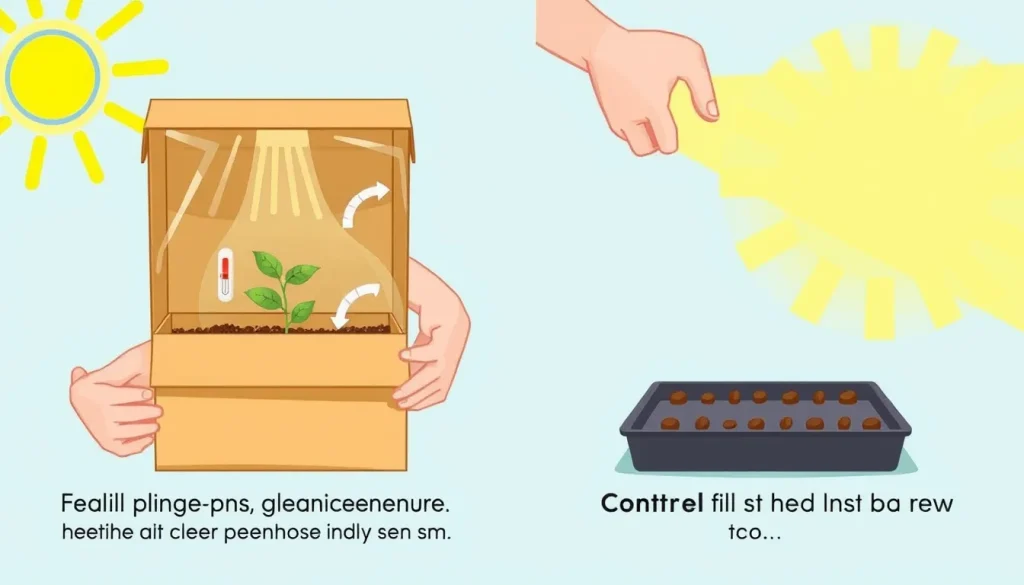
Greenhouses are simple structures that let sunlight in, warm the air and soil, and keep that heat from escaping. By building a miniature greenhouse from cardboard and clear plastic, children can see the greenhouse effect in action, collect temperature data, and compare how fast seedlings grow inside versus outside. The activity is framed as an engineering challenge: design a container that maximizes warmth while staying affordable and easy to construct.
Before You Begin
- Workspace: Choose a dry table or countertop with good natural light. A sunny windowsill works well for the testing phase.
- Adult supervision: Kids will cut cardboard and use scissors or a craft knife. Younger children (6‑8) should have an adult do the cutting.
- Weather note: If it rains during the observation period, move the greenhouse to a covered but sunny spot or use a clear plastic container to protect it.
- Safety: Wear safety glasses when cutting, and keep sharp tools out of reach of younger participants.
Materials
| Item | Quantity | Notes / Substitutions |
|---|---|---|
| Cardboard box (e.g., a medium‑size shipping box) | 1 | Sturdy enough to hold soil; corrugated preferred. |
| Clear plastic wrap or a clear plastic sheet (≥0.5 mm thick) | 1 sheet (≈30 × 30 cm) | Plastic grocery bag can work for small models. |
| Scissors or craft knife | 1 set | Adult‑only for the knife. |
| Ruler or measuring tape | 1 | |
| Masking tape or painter’s tape | 1 roll | Will not leave residue on plastic. |
| Potting soil | ~1 L | Any seed‑starting mix. |
| Seeds (fast‑germinating beans, peas, or radish) | 10‑15 | Choose a seed that sprouts in 3‑5 days. |
| Water (room‑temperature) | as needed | Use a spray bottle for gentle watering. |
| Thermometer (digital or glass) | 1 | Optional but recommended for measuring soil temperature. |
Design Constraints & Success Criteria
Constraints (the rules you must follow)
- All structural parts must be made from the listed cardboard, plastic, and tape. No metal frames or purchased greenhouse kits.
- The finished greenhouse must be no larger than 30 cm tall, 30 cm wide, and 30 cm deep so it fits on a typical windowsill.
- Construction time should not exceed 45 minutes of active work.
- The design must allow a clear view of the seedlings for daily observation.
Success criteria (how you’ll know it works)
- Temperature gain: Soil temperature inside the greenhouse should be at least 5 °C higher than soil temperature outside after 2 hours of sun.
- Growth boost: Seedlings inside the greenhouse should be at least 1 cm taller than a matched control seedling grown in the open after 7 days.
- Durability: The structure stays intact for the full 14‑day observation period without tearing.
Step‑by‑Step Build
- Prepare the box. Open the cardboard box and cut off the top flaps; keep them for later if you want a hinged lid. Flatten the sides to create a shallow tray about 5 cm high. This will become the base that holds soil.
- Make the frame. Cut four strips of cardboard, each 30 cm long and 2 cm wide. Tape them upright along the inner edges of the base to form a square “frame” that will support the clear cover.
- Fill with soil. Add potting soil to the base, leaving a 2 cm margin from the top edge. Lightly tamp the soil so it is level.
- Sow the seeds. Plant 3‑5 seeds about 1 cm deep, spaced evenly across the soil surface. Water gently with a spray bottle until the soil is moist but not soggy.
- Cover with clear plastic. Lay the clear plastic sheet over the frame, stretching it so it covers the entire opening. Secure the edges with tape, making sure the plastic is taut to minimize air gaps.
- Create a ventilation flap (optional). Cut a small 2 × 2 cm slit near the top of the plastic and tape a piece of cardboard that can be lifted to let excess heat escape on very hot days.
- Label the greenhouse. Write the start date on the side with a marker. This helps track the observation period.
- Set up the control. In a second identical soil tray placed next to the greenhouse (but without a cover), sow the same number of seeds. This will serve as the “outside” comparison.
- Place in sunlight. Position both the greenhouse and the control on a sunny windowsill where they receive direct sun for at least 4 hours each day.
- Record initial data. Use the thermometer to measure soil temperature at the seed depth in both the greenhouse and the control. Write the values in the data table (see below). Also note the date, time, and weather conditions.
- Observe daily. Each day, check seedling height, count the number of leaves, and note any wilting or condensation on the plastic. Record the data at the same time each day.
- Maintain moisture. Lightly mist the soil every two days, ensuring the soil stays moist but not water‑logged.
- Analyze results. After 7 days, compare the average height of seedlings inside versus outside. Calculate the temperature difference from the first and last measurements.
What to Observe or Measure
Use the table below to record quantitative data. Qualitative notes (e.g., “condensation on plastic”) can be added in the comments column.

| Day | Soil Temp (°C) – Greenhouse | Soil Temp (°C) – Control | Seedling Height (cm) – Greenhouse | Seedling Height (cm) – Control | Comments |
|---|---|---|---|---|---|
| 1 | |||||
| 2 | |||||
| 3 | |||||
| 4 | |||||
| 5 | |||||
| 6 | |||||
| 7 |
The Science Explained
A greenhouse works because short‑wave solar radiation (visible light) passes through transparent material like clear plastic, heating the soil, water, and plant leaves. Those surfaces then emit long‑wave infrared radiation, which the plastic does not let escape easily. The result is a warmer interior—a principle called the greenhouse effect.1 Warmer soil speeds up the biochemical reactions that drive seed germination and early growth, so seedlings inside a greenhouse often sprout faster and grow taller than those in open air.2
In addition to temperature, the enclosed space reduces wind stress and retains humidity, which can lessen water loss through transpiration. However, too much humidity may cause mold, so a small vent (the optional flap) helps balance heat and moisture.3
By measuring the temperature difference and seedling height, participants connect a physical observation (heat retention) to a biological outcome (plant growth). This aligns with NGSS standards for grades 3‑4 that address how greenhouse structures protect plants from extreme weather and affect soil temperature1.
Troubleshooting
- Plastic tears or pulls away. Reinforce edges with extra tape or use a second layer of plastic.
- No temperature rise. Ensure the plastic is tightly stretched; gaps let warm air escape. Check that the greenhouse receives direct sun, not just reflected light.
- Condensation builds up. Open the ventilation flap for a few minutes each afternoon to let excess moisture escape.
- Seedlings wilt. The soil may be too dry or the greenhouse may be overheating. Mist lightly and, if needed, shade the greenhouse with a thin piece of cardboard during the hottest hour.
Next Steps & Extensions
Once the basic design is proven, families can explore variations:
- Material test: Replace the clear plastic with a darker translucent sheet and compare temperature gains.
- Size comparison: Build two greenhouses of different heights and see how volume affects heat retention.
- Insulation experiment: Add a layer of shredded newspaper inside the walls and measure any change in temperature stability.
- Longer observation: Continue recording for 14 days to see how the growth advantage develops over time.
These extensions turn the activity into a full engineering design cycle: brainstorm, prototype, test, and iterate.
Related terms
- Greenhouse effect
- The process where transparent material lets sunlight in but traps heat, raising the temperature inside.
- Seedling
- A young plant that has just emerged from a seed.
- Transpiration
- The loss of water vapor from a plant’s leaves.
- Solar radiation
- Energy from the Sun, primarily in the form of visible light, that reaches Earth.
- Insulation
- Materials or design features that reduce heat loss.
Sources & references
- Engineering Mini Greenhouses | FarmBot OER, https://oer.farm.bot/docs/farming/greenhouses/engineering-mini-greenhouses.html
- Build Your Own Tiny Greenhouse, https://www.grownyceducation.org/post/build-your-own-tiny-greenhouse
- At Home Science: STEM Challenge – Build Your Own GreenHouse, https://atlantabg.org/wp-content/uploads/2021/03/STEM-Challenge.pdf
- Build a Miniature Greenhouse, Free Classroom Learning Activity | The Purple Plow Challenge, https://www.purpleplow.org/puzzlers/mini-greenhouse