Overview
Many gardeners and teachers start seed‑testing with a wet paper towel because it gives a quick visual cue of whether a seed is alive. But in the garden the seed grows in soil. This experiment asks a concrete question that children can answer with simple observations: Do different seed types germinate faster on a moist paper towel or when planted directly in soil?
Before You Begin
- Adult supervision is recommended for children under 10, especially when handling scissors, measuring tools, or hot water.
- Choose a well‑ventilated space with consistent temperature (ideally 20‑25 °C or 68‑77 °F).
- Gather all materials before you start so the timing of each seed batch is the same.
Materials
- Four seed varieties (e.g., beans, corn, lettuce, and radish). Use seeds that are fresh or have a known viability.
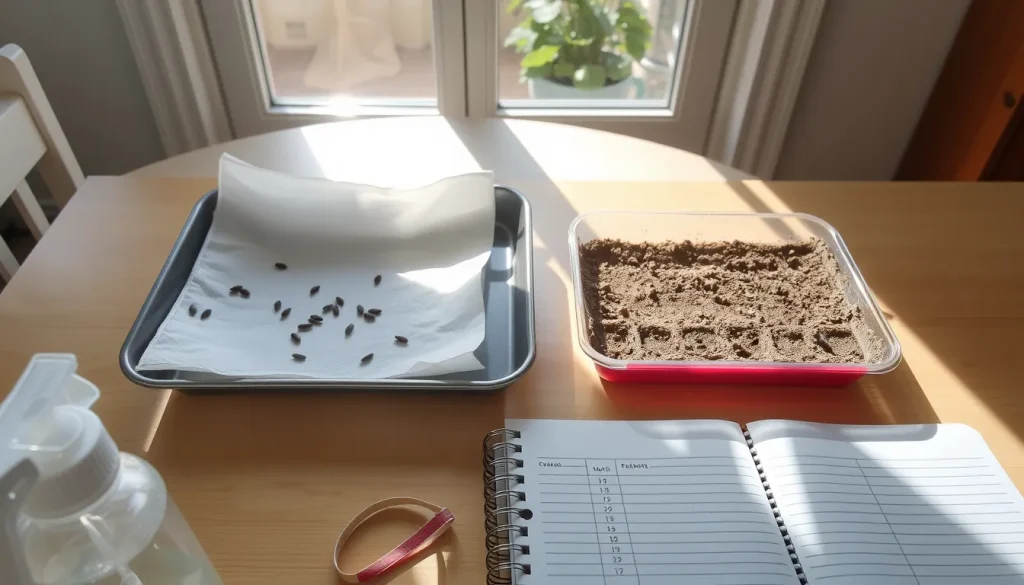
- Two shallow trays or disposable plates – one for the paper towel setup, one for the soil setup.
- Unbleached paper towels or coffee filters (about 1 mm thick).
- Potting soil or a seed‑starting mix (a light, sterile mix works best).
- Distilled or tap water at room temperature.
- Measuring cup, spray bottle or mister, rubber bands, and a permanent marker.
- Ruler or a piece of graph paper for measuring sprout length (optional).
- Notebook or printable data sheet (see the Data Table section).
Testable Question
Which medium – a moist paper towel or direct soil – allows each seed type to produce its first visible shoot the quickest?
Hypothesis
Because a paper towel keeps the seed uniformly moist and provides good oxygen flow, many small seeds (like beans and radish) are expected to sprout faster on the towel than in soil. Larger seeds with more stored food (such as corn) may show little difference.
Variables and Controls
- Independent variable: Growing medium (moist paper towel vs. direct soil).
- Dependent variable: Time (in days) until the first healthy shoot of at least 5 mm appears.
- Controlled variables: Seed variety, amount of water, ambient temperature, light exposure, and the day of planting.
- Control group: For each seed type, the soil condition serves as the control because it reflects the normal gardening practice.
Procedure (Steps)
- Label the trays. Write “Paper Towel” on one tray and “Soil” on the other. Also label each seed type on both trays (e.g., “Beans – Towel”, “Beans – Soil”).
- Prepare the paper towel. Lay a sheet of paper towel on the “Paper Towel” tray. Moisten it with a spray bottle until it is damp but not dripping (see Southern Exposure guide [1]). Fold the towel over the seeds and secure with a rubber band 1 inch from the top, creating a sealed pocket as described in the same guide.
- Place seeds on the towel. Randomly select 10 seeds of each variety (do not discard any looking damaged; this keeps the sample unbiased). Spread them evenly across the upper half of the towel.
- Cover with a second towel. Moisten a second towel and gently lay it over the first, creating a “sandwich” that keeps moisture in while allowing air exchange (UAF procedure [2]).
- Prepare the soil tray. Fill the “Soil” tray with a shallow layer (about 1 cm) of potting mix. Moisten the soil evenly – it should feel damp but not soggy.
- Plant the soil seeds. Press each seed gently into the soil, spacing them at least 2 cm apart. Cover lightly (about 0.5 cm of soil) and water gently to settle the medium.
- Cover both trays. Place a clear plastic bag or a transparent container over each tray to maintain humidity, but leave a small opening for air exchange.
- Start the timer. Mark the day of planting as Day 0 in your notebook.
- Observe daily. Each morning, check both trays. Record the first day a seed shows a shoot ≥5 mm. Note any seeds that appear moldy or do not sprout.
- End the test. After 14 days, stop observations. Most common garden seeds will have germinated by then; any that have not are counted as non‑germinated.
What to Observe or Measure
- Germination day: The calendar day when the first visible shoot appears for each seed.
- Germination percentage: Number of seeds that sprout divided by the total seeds planted (expressed as %).
- Sprout length (optional): Measure the longest shoot with a ruler; this can show whether the medium also affects early growth rate.
Data Table
| Seed Type | Medium | Seed # | Germination Day | Germinated? (Y/N) |
|---|
Use one row per seed. After the trial, calculate the average germination day for each seed‑medium pair.

Repeating the Trial
To improve reliability, repeat the whole experiment with a new batch of seeds (or swap the order of the trays) at least three times. Compare the averages; small variations are normal because living systems are not perfectly uniform.
The Science Explained
Seed germination requires three basic conditions: water, oxygen, and suitable temperature. Water activates enzymes that break down stored food, oxygen fuels respiration, and temperature influences the speed of biochemical reactions. A moist paper towel provides a consistently wet surface and excellent air flow, which often speeds up the first visible sign of growth. Soil, while also supplying water and oxygen, can retain excess moisture, become compacted, or have uneven temperature, all of which can slow germination.
Different seeds have different coat thicknesses and energy reserves. Small, thin‑coated seeds (like beans and radish) absorb water quickly and benefit from the uniform moisture of a towel. Larger seeds (like corn) contain more stored food and may be less sensitive to the exact moisture level, so the difference between towel and soil can be smaller. A study of several vegetable seeds showed that germination on paper towel was generally earlier than in a coco‑peat substrate, except for cucumber, which germinated faster in the substrate due to its specific physiological needs (Arshad et al., 2020 [3]).
Temperature and light also matter. Most garden seeds germinate best at 20‑25 °C and in light or darkness depending on the species. Keep both trays in the same location to ensure these factors are identical for the comparison.
Graphing Your Results
Create a simple bar chart:
- X‑axis: Seed type (grouped by medium).
- Y‑axis: Average germination day.
- Two bars per seed type – one for “Paper Towel” and one for “Soil”.
Bars that are lower indicate faster germination. This visual makes it easy to see which medium gave the quickest start for each seed.
Troubleshooting
- Seeds stay dry. Re‑mist the towel or soil lightly; the paper towel should stay damp but not soggy.
- Mold appears on the towel. Reduce humidity by opening the plastic cover slightly and ensure the towel isn’t water‑logged.
- No germination after 7 days. Check seed viability – older or improperly stored seeds may be dead. Try a fresh batch.
- Soil dries out quickly. Cover the tray more tightly or mist the soil twice daily.
Common Misconceptions
- “Paper towels kill seeds because they’re synthetic.” – Unbleached paper towels are inert and, when kept moist, simply provide a uniform water source.
- “If a seed sprouts on a towel, it will grow the same in soil.” – Early germination is only the first step; seedlings may need different nutrients or root space that soil provides.
- “All seeds germinate at the same speed.” – Seed size, coat thickness, and stored food create wide variation, which this experiment highlights.
Try Another Version
Once the basic comparison is complete, extend the experiment by changing one additional factor:
- Temperature: Place one set of trays in a warm window (≈25 °C) and another in a cooler spot (≈15 °C) to see how heat interacts with the medium.
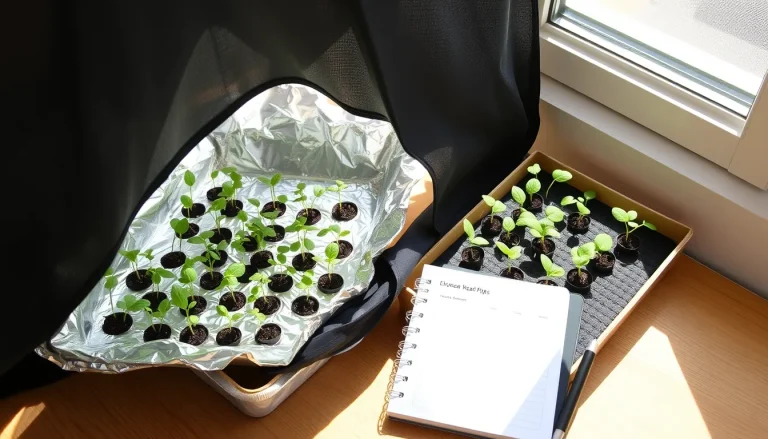
- Light: Cover half the trays with opaque cardboard to test light‑dependent germination.
- Moisture level: Use a slightly drier towel (just moist) versus a fully saturated one.
Each variation adds a new independent variable and can be turned into a full experiment with its own data table.
Next Steps
When the seedlings have developed two true leaves, transplant the fastest‑germinating plants into larger pots or a garden bed. Compare the later growth stage with the initial germination speed to discuss whether early advantage translates into bigger plants.
Enjoy watching science grow right before your eyes!
Related terms
- Germination
- The process by which a seed awakens from dormancy, absorbs water, and begins to grow a shoot and root.
- Seed viability
- A measure of how many seeds in a batch are capable of germinating and developing into healthy seedlings.
- Substrate
- The material (such as paper towel, soil, or coco‑peat) that provides support and moisture for a germinating seed.
Sources & references
- Southern Exposure Seed Exchange – How to Test Germination, https://southernexposure.com/how-to-test-germination
- University of Alaska Fairbanks Cooperative Extension – Procedures for the Wet Paper Towel Germination Test, https://www.uaf.edu/ces/publications/database/gardening/procedures-wet-towel-germ.php
- Arshad Nadeem et al., Validation of Seed Germination Percentage and Its Attributes for Different Vegetables, 2020, https://www.asthafoundation.in/img/07-ArshadNadeem.pdf