Overview
This demonstration lets children watch atmospheric pressure change in real time using only a clear jar, water, and a strip of paper. As the air pressure rises, the water level in the jar moves, and the paper indicator shows the direction of the change. The activity is safe, inexpensive, and provides a clear visual link between pressure and weather.
Before You Begin
- Workspace: Choose a stable table away from direct sunlight or drafts.
- Adult supervision: Required for handling the jar and for cutting paper.
- Safety: Use a plastic or glass jar that is not cracked. No chemicals are involved, but keep the water away from electrical devices.
Materials
- 1 clear glass or plastic jar (about 250 ml capacity)
- Water (room‑temperature)
- 1 sheet of plain paper (A4 or letter size)
- 1 drinking straw (plastic)
- Rubber band
- Masking or clear tape that sticks when wet
- Ruler (centimetre marks)
- Permanent marker
All of these items are commonly found at home or in a classroom supply cabinet.
Steps
- Fill the jar with water to about three‑quarters full. The water surface should be level and calm.
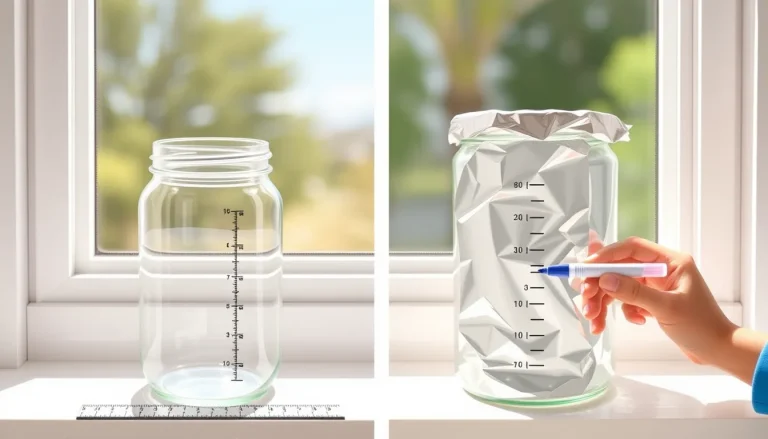
- Using the ruler, draw a vertical scale on the outside of the jar. Mark every 0.5 cm and label the bottom as “0”.
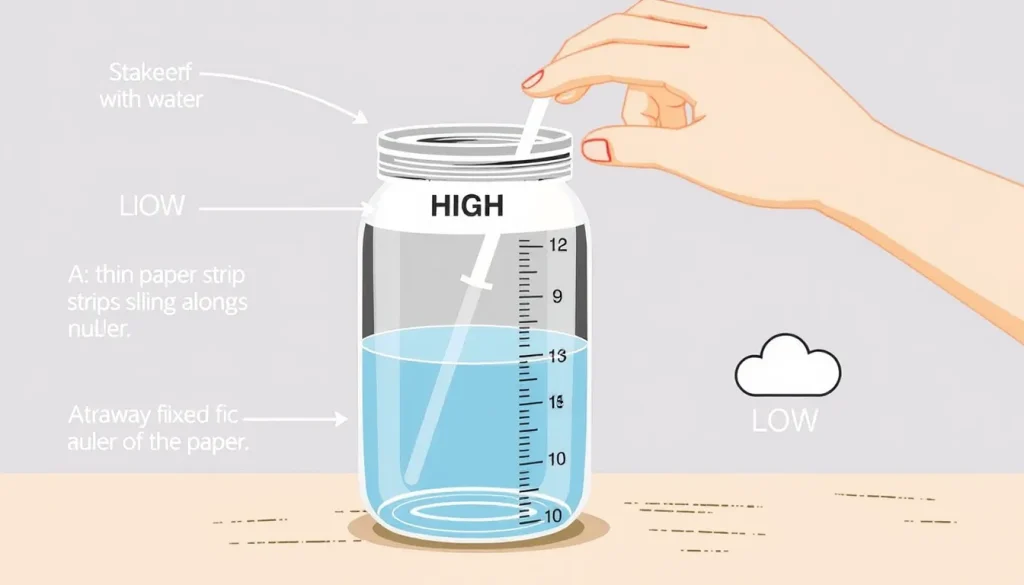
- Cut a strip of paper about 1 cm wide and 5 cm long. Write the word “HIGH” on one end and “LOW” on the other.
- Roll the paper into a thin cylinder and secure it with a rubber band so it can slide up and down the jar.
- Insert the straw through the centre of the paper cylinder. Tape the straw to the paper so the paper can move freely but the straw stays fixed in the same vertical position.
- The straw’s tip should just touch the water surface without breaking it.
- Place the paper‑straw assembly against the side of the jar, aligning the bottom of the paper with the “0” mark on your scale. Secure the paper to the jar with a small piece of tape at the bottom only; the tape should not restrict vertical movement.
- Observe the water level. When the atmospheric pressure increases, the water pushes up slightly, and the paper slides upward (toward “HIGH”). When pressure drops, the water level falls and the paper slides downward (toward “LOW”).
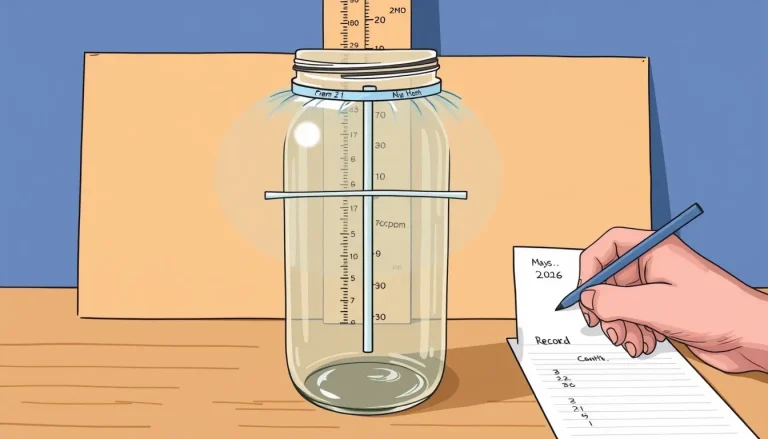
- Record the position of the paper at regular intervals (e.g., every hour) and note any weather changes you notice outside.
What to Observe or Measure
- Paper position: Read the nearest mark on the jar’s scale where the bottom of the paper sits.
- Time: Note the date and time of each observation.
- Weather conditions: Write a brief description (clear, cloudy, windy, rain) alongside each reading.
These qualitative notes help children correlate pressure trends with actual weather.
The Science Explained
Atmospheric pressure is the weight of the column of air above us. When the air is heavy (high pressure), it pushes down on the water surface, causing the water level in the jar to rise slightly. When the air is lighter (low pressure), the water level falls. The paper strip acts as a visual indicator that moves with the water level, making the invisible pressure changes visible.

Water is a convenient fluid for a home‑made barometer because it is safe and readily available, though it is much lighter than mercury. A water column of about 10 m would balance normal atmospheric pressure, but in a small jar the change is only a few millimetres—still enough to move a light paper strip (source 2).
Because the system is open to the air, temperature can also affect the water level; warmer water expands slightly, which may make the paper move upward even when pressure is steady. Encourage learners to note temperature if they wish to explore this secondary effect.
Troubleshooting
- Paper does not move: Ensure the paper is light and can slide freely. Reduce friction by using a smoother paper or a thin piece of plastic film.
- Water spills over the rim: Fill the jar no more than three‑quarters full.
- Straw touches the bottom of the jar: Trim the straw so the tip rests just on the water surface.
- Observations are erratic: Check that the jar is not being moved or tilted between readings.
Cleanup and Storage
- Dispose of the water down the sink.
- Dry the jar and store the paper strip in a dry envelope for future use.
- Rinse the straw and let it air‑dry.
Next Steps
- Compare your water barometer with a digital pressure sensor or a commercial aneroid barometer, if available.
- Extend the observation period to a week and plot the paper position versus time on a simple line graph.
- Experiment with a narrower straw or a longer paper strip to see how sensitivity changes.